Children's charities in the Netherlands: how to choose where your money makes a difference
Want to give to a charity for children? The kinds of children's charities there are, how to check whether one is trustworthy, and how you can help children with your time too.
In this story
- What kinds of children's charities are there?
- How many children in the Netherlands grow up in poverty?
- Should you give close to home or far away?
- How do you check whether a children's charity is trustworthy?
- Children's charities on Karma Points
- Would you rather give your time to children?
- Is a gift to a children's charity tax-deductible?
- And on Karma Points?
If you want to give to a children's charity, first decide what you want to achieve: helping children who grow up in poverty, improving their chances at school, giving a child a mentor, or standing up for children's rights worldwide. Then check that the charity is an ANBI and look at what it actually does with your money. Close to home, you can often see the difference for yourself.
Below you'll find the kinds of children's charities there are, how to check whether one is trustworthy, and how you can help children with your time too.
What kinds of children's charities are there?
"Children's charities" covers a lot of ground. It helps to split them into a few groups:
- Basic needs and poverty. Charities that make sure children have food, clothes, school supplies or a birthday, or that give families in crisis one-off help.
- Opportunities and education. Tutoring, reading and maths programmes, or help with the move to secondary school.
- Mentoring and coaching. A steady adult who makes time for a child and helps them discover their talents.
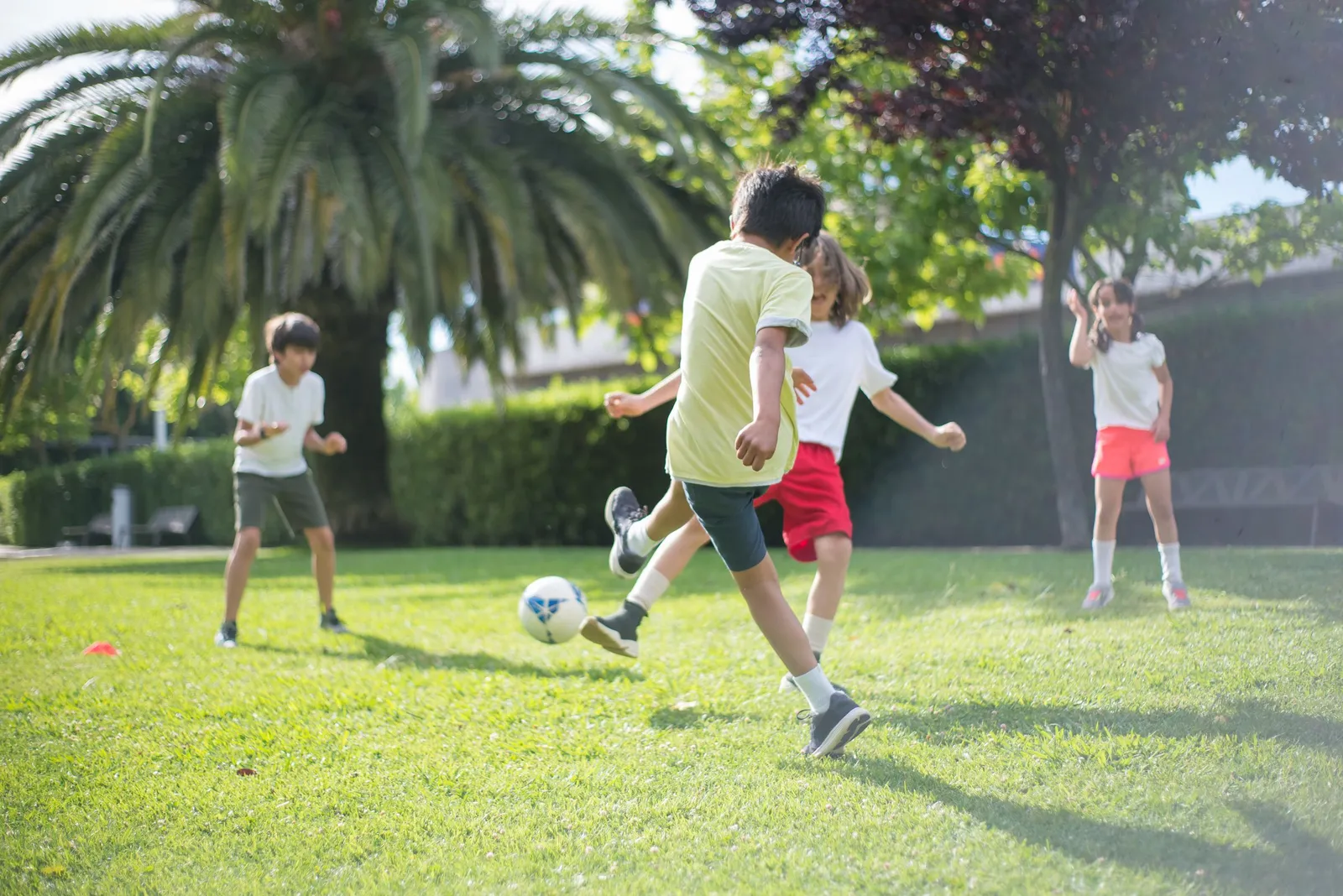
- Sport and play. Sport as a way to build confidence, teamwork and a healthy lifestyle.
- Children's rights worldwide. Organisations that stand up for children's rights through research, advocacy and campaigns.
There is no single best choice. It does help to pick one or two groups that really speak to you. You're more likely to stay involved, and you won't simply give to whichever charity shouts loudest.
How many children in the Netherlands grow up in poverty?
In the Netherlands, too, children grow up in families that have too little to get by. According to Statistics Netherlands (CBS), that was 93,000 children under 18 in 2024, or 2.8 per cent of all children, the same share as in 2023. It is a provisional figure (CBS, Leven in armoede 2025, in Dutch).
CBS uses a new method for this, developed with Nibud and SCP. A household counts as poor if, after paying fixed costs such as housing, energy and healthcare, too little is left for other basic needs. If you see higher numbers elsewhere, check which definition was used. Other methods count differently.
Behind every number is a child who may not be able to go on the school trip, join a sports club or find a quiet place at home to do homework. Charities in your own city often know exactly where the pressure is.
Should you give close to home or far away?
Both are possible, and both are good. The difference is mostly in what you can see and follow.
| A charity close to home | An international charity | |
|---|---|---|
| What you see | You can visit and may know someone who goes there | You follow the work through reports and updates |
| Where it helps | Children in your own city or region | Children in countries where the need is often greater |
| Giving time | Often possible, as a volunteer | Usually only with money or campaigns |
Many people mix the two: a regular amount to a charity far away, and something extra once a year for one nearby. For more on making that choice, read How to choose a charity that suits you.
How do you check whether a children's charity is trustworthy?
People often give to children's charities from the heart, and that's a good thing. That's exactly when a quick check pays off:
- Is it an ANBI? An ANBI is a charity that the Belastingdienst recognises as working for the public good. Look the charity up in the Belastingdienst's ANBI register (in Dutch).
- Does it have the CBF seal? CBF is the Dutch body that reviews fundraising charities. The CBF register (in Dutch) shows which charities have the seal, have applied for it or no longer have it. You can filter on children (kinderen) as a target group and on national or local charities. Smaller charities don't always have the seal. That doesn't make them untrustworthy, but it does mean you take the other steps extra carefully.
- What exactly does it do? A good charity can tell you in a few sentences which children it works with, what it does with them and for how long. "We help children" is too vague.
- Does it show results? Look in the annual report or the updates for how many children took part and what changed.
The Giving guide takes you further with a checklist, including what a charity's costs do and don't tell you.
Children's charities on Karma Points
Karma Points lists several charities that work with children and young people. What follows comes from their own descriptions on their profiles (in Dutch):
- Giovanni van Bronckhorst Foundation in Rotterdam offers children in the last two years of primary school (groep 7 and 8) a five-month programme of coaching, reading comprehension, spelling and maths, with sport as the common thread. The children also visit companies and learn how to handle money.
- Stichting B for You in Rotterdam matches children who grow up in difficult circumstances with a mentor, so they get attention and can develop their talents.
- KidsRights, based in Amsterdam, is an international children's rights organisation. It supports young changemakers who stand up for children's rights, awards the International Children's Peace Prize and publishes the KidsRights Index every year.
- Netwerk Nieuw Rotterdam runs weekly activities for and with young Rotterdammers aged 16 to 27, with a focus on young people in a vulnerable position.
We check every charity on Karma Points before it goes live: its ANBI status, its documents and a visit. After that, we do it again every quarter. This is how we verify charities. You'll find the causes running now at causes.
Would you rather give your time to children?
Money isn't the only way. Many children's charities depend on volunteers: as a mentor, helping with homework, as a coach or at an activity.
If you volunteer with or around children, the organisation will often ask for a VOG (Verklaring Omtrent het Gedrag), a Dutch certificate of conduct. If the organisation takes part in the free VOG scheme (Regeling Gratis VOG), you pay nothing. The organisation prepares the application and you submit it with DigiD, the Dutch government login. If it doesn't take part, a digital application costs € 33.85 (Justis, VOG for volunteers; Regeling Gratis VOG, conditions, both in Dutch).
Organisations in the scheme must have an active prevention policy. Feel free to ask about it when you start: an organisation that takes protecting children seriously will be glad to tell you what's expected of you.
Looking for a task? See volunteering for tasks in and around Rotterdam. Never volunteered before? Read How to start volunteering or the Volunteering guide first.
Is a gift to a children's charity tax-deductible?
Yes, if the charity is an ANBI and you don't give in cash. For ordinary gifts there is a threshold: you can only deduct the part above 1% of your threshold income (drempelinkomen), with a minimum of € 60. You never deduct more than 10% of your threshold income (Belastingdienst, Are gifts to charities deductible?, in Dutch). So a coin in a collection tin doesn't count.
How it works in detail, with a worked example, is in ANBI and tax relief on donations.
Please note: this is a plain-language explanation, not tax advice. The rules can change. Always check the Belastingdienst for your own situation.
And on Karma Points?
When you give through Karma Points, 90% of your donation goes straight to the charity. The other 10% is the fee that keeps Karma Points running, including VAT. Every contribution, money or time, earns you karma points, which you redeem with local brands in the app.
Curious what your gift could do? Try the impact calculator, or take your time looking through the causes and pick a children's charity that suits you.
Sources: CBS, Leven in armoede 2025; CBF, Register of recognised charities; Belastingdienst, Checking ANBI status; Belastingdienst, Are gifts to charities deductible?; Justis, VOG for volunteers; Regeling Gratis VOG, conditions (all in Dutch).