Volunteering at a food bank in the Netherlands: what you do and how to sign up
As a food bank volunteer you collect food, sort it, pack parcels, help hand them out or work behind the scenes. You sign up with the food bank in your own municipality. Here is how it works and what to expect.
In this story
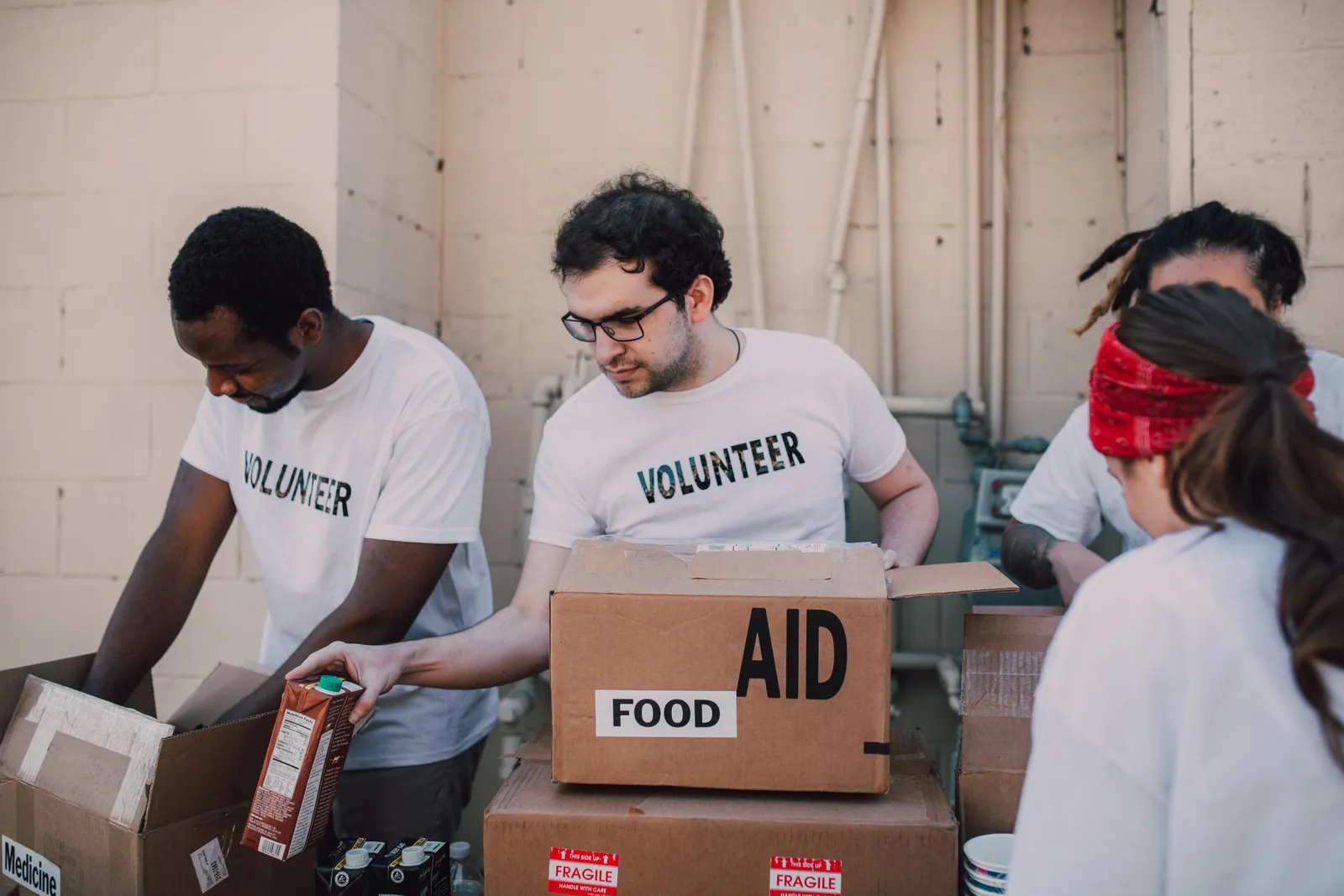
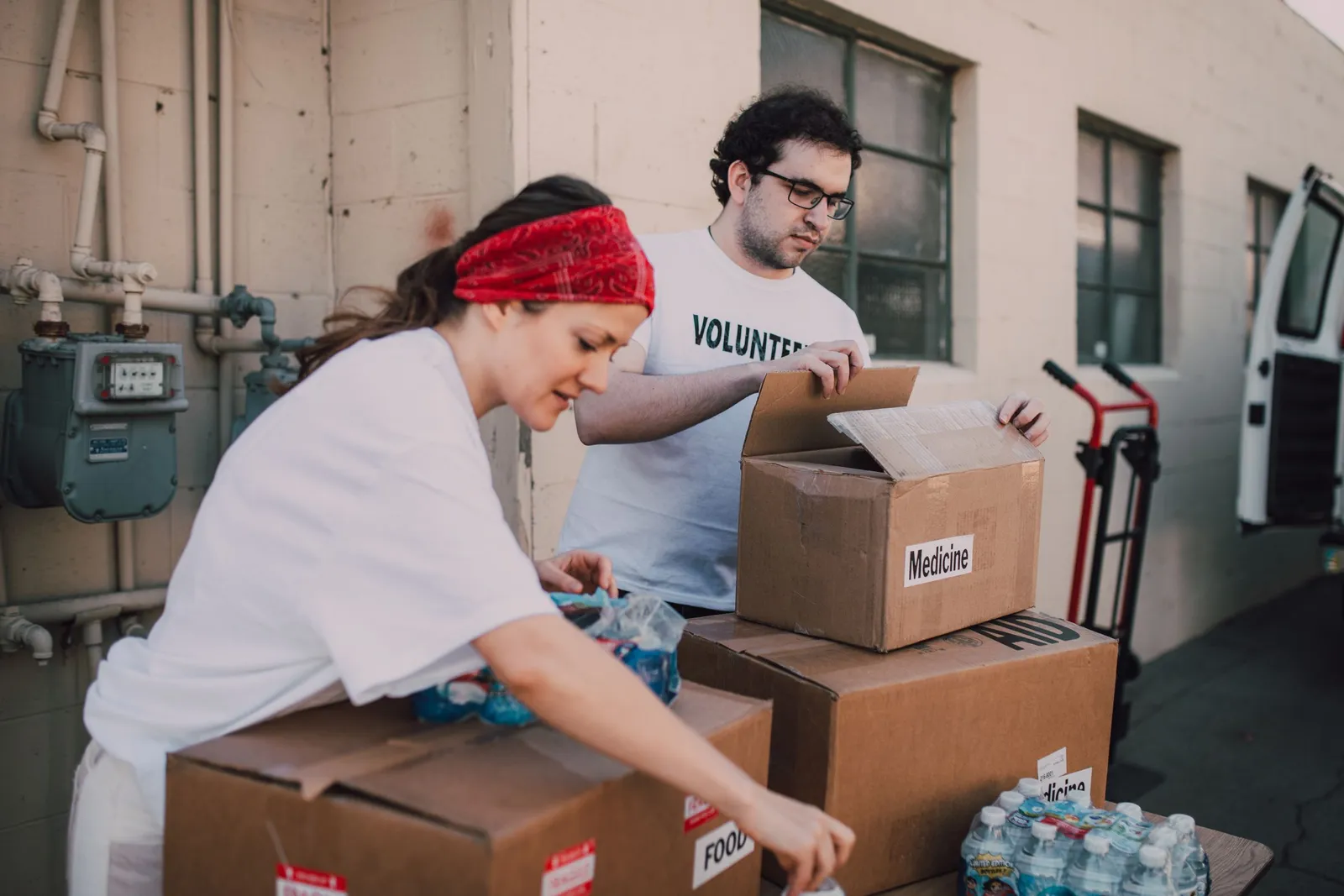
As a food bank volunteer in the Netherlands you help people who temporarily can't manage on their own get enough to eat. You collect food, sort it, pack parcels, help hand them out or work behind the scenes, for example in logistics or administration. You sign up with the food bank (voedselbank) in your own municipality, because each food bank is a separate organisation.
Below you'll find which roles there are, what to expect and how to get started.
How big are the food banks in the Netherlands?
Dutch food banks run entirely on volunteers. The annual report of Voedselbanken Nederland, the national association, gives these figures for 2025 (Jaarverslag 2025, pdf, in Dutch):
| 2025 | |
|---|---|
| Food banks | 181 |
| Distribution points | 472 |
| Regional distribution centres | 10 |
| People who received food aid | 155,600, 7.5% more than in 2024 |
| Of whom under 18 | 31,530 |
| Volunteers | 14,466, 3% more than in 2024 |
The association calls itself a volunteer organisation "where nobody is on the payroll". In other words: no volunteers, no parcels.
Is there a shortage of food bank volunteers?
In many places, yes. In October 2026 the Dutch news site Hart van Nederland reported that a third of Dutch food banks have too few volunteers (Hart van Nederland, 5 October 2026, in Dutch). People with specific skills are especially hard to find: IT specialists, HR people, managers and logistics coordinators. People are less willing to commit to a regular role, so a recruitment campaign is aimed at, among others, working people aged 40 to 65, retirees and people between jobs.
The annual report also says keeping volunteers has become harder, precisely because the job market is so tight.
What does a food bank volunteer do?
There is more to it than packing parcels. According to the annual report, 61% of the food is sourced locally by the food banks themselves, and 39% comes through national collection and the regional distribution centres. That creates all kinds of roles:
- Collecting. Picking up food from shops, producers and food drives.
- Sorting and packing. Checking products, sorting them and putting together a parcel for each household. Food safety matters here: under the association's rules, each food bank is responsible for it (Reglement 2024, pdf, in Dutch).
- Handing out. At the distribution point you give out the parcels and are in direct contact with clients. A friendly word goes a long way.
- Intake. Assessing with new clients whether they can receive food aid. This is done by a food bank volunteer or an outside organisation.
- Driving and logistics. Planning and driving transport between distribution centres, food banks and distribution points, keeping track of stock and checking the temperature of chilled products.
- Behind the scenes. Coordination, planning, IT, HR, communication, fundraising and the board.
The roles differ from one food bank to the next. A small food bank with one distribution point has different vacancies from a large one with its own warehouse.
Do you get paid or an allowance?
No, there is no wage. The association's rules say food banks work "only with unpaid volunteers" and never act as an employer. Whether you can claim expenses, such as travel costs, is something to ask your own food bank. For the general Dutch rules on payments to volunteers, see volunteer allowances in the Netherlands.
Do you need a VOG?
That depends on your role. Under the rules, everyone who volunteers directly signs a confidentiality agreement. You'll see who uses the food bank, and that stays private.
Board members, coordinators and intake volunteers also need a positive VOG (Verklaring Omtrent het Gedrag), a Dutch certificate of conduct. For other roles, such as sorting or packing, the rules don't mention a VOG. Ask your own food bank what applies there.
Will you get training?
Yes, food banks pay attention to it. Through the Voedselbank Academie, volunteers take e-learning courses on topics including food safety and dealing with aggression. Volunteers in direct contact with clients also get resilience training (Jaarverslag 2025).
How do you sign up as a food bank volunteer?
- Find the food bank in your municipality. Each food bank works in its own area, so you sign up with the one near you. Search for "voedselbank" plus the name of your town.
- See which roles are open. Many food banks post vacancies on their own website. If there's nothing listed, just get in touch.
- Think about what you can offer. How much time do you have, and when? Do you have a driving licence, or experience in logistics, IT or HR? Those are exactly the people food banks are looking for now.
- Ask whether you can join for a shift first. That way you'll see whether the place and the people suit you.
- Sort out the formalities. Sign the confidentiality agreement and, if your role requires it, apply for a VOG.
If you don't speak Dutch yet, ask which roles might suit you. Your local volunteer centre (vrijwilligerscentrale) can also help; how to find it is explained in finding volunteering near you. Not sure yet whether this suits you? The Volunteering guide helps you choose based on what matters to you.
Volunteering around food in Rotterdam
If you live in Rotterdam, you sign up with the food bank in Rotterdam itself. The municipality also runs Zorgzaam010, a platform where volunteering requests and offers come together. As a volunteer in Rotterdam you are insured through the municipality with the Maasstadpolis, an accident and liability insurance. You don't need to register for it (Gemeente Rotterdam, Vrijwilligerswerk, in Dutch).
Want to do something about food waste too? On Karma Points you'll find BuurtBuik (profile in Dutch), which rescues surplus food in Rotterdam West and Zuid and turns it into free meals where neighbours come together. Every charity on Karma Points has been checked by us.
A first step
A regular morning at the food bank is a good way to do something for people in your own town. If a regular role doesn't fit right now, take a look at volunteering on Karma Points. Each task shows the date, the place and how many spots are left, and you can sign up without an account. New to volunteering? Read how to start volunteering as well.
Sources: Voedselbanken Nederland, Jaarverslag 2025 (pdf, in Dutch); Voedselbanken Nederland, Reglement 2024 (pdf, in Dutch); Hart van Nederland on the shortage of food bank volunteers (5 October 2026, in Dutch); Gemeente Rotterdam, Vrijwilligerswerk (in Dutch).